


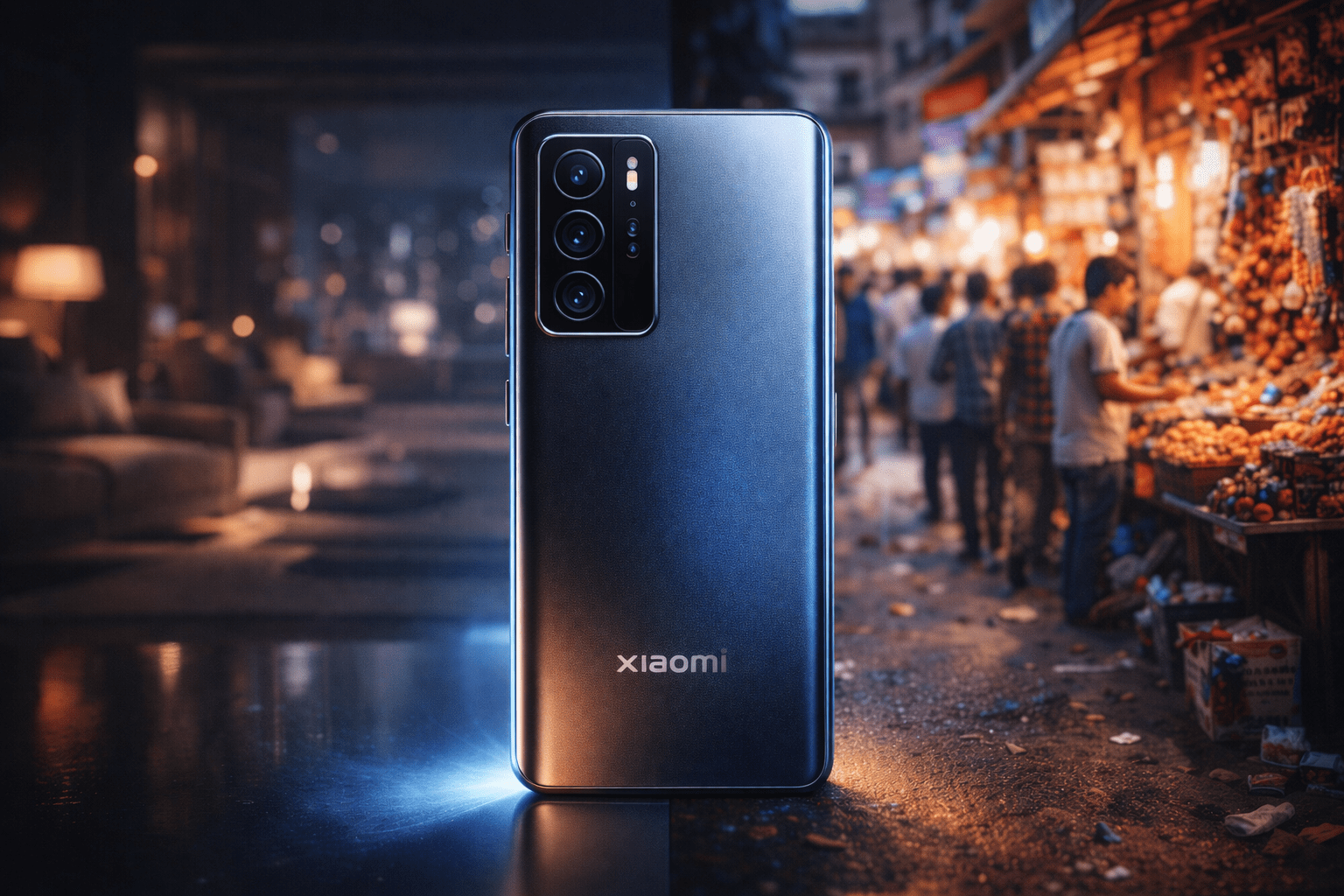
The Xiaomi Premium India strategy marks a major shift in how the brand is positioning itself in the country. The Xiaomi Premium India approach shows that the company is no longer focused only on budget smartphones, but is now targeting high-end users and building a stronger ecosystem.
Now, though, Xiaomi appears to be trying something different. Recent reporting shows the company is leaning harder into premium products, a broader device ecosystem, and a more value-focused approach rather than chasing sheer volume at the low end. That makes this an important moment for the brand in India. The big question is whether this is the right time for Xiaomi to move upmarket, or whether the company risks losing the identity that made it successful in the first place.
Why Xiaomi Is Changing Course
The smartphone market in India is not the same as it was a few years ago. Earlier, rapid growth in the budget and lower mid-range segments helped brands like Xiaomi scale fast. But the market has matured. More buyers now keep phones for longer, replace them less often, and increasingly look for better cameras, stronger design, longer software support, and ecosystem benefits rather than raw specifications alone.
At the same time, the premium and ultra-premium segments in India have kept gaining importance. Counterpoint Research said the ultra-premium segment above ₹45,000 reached a record 17% share in Q4 2025. That is a major sign that Indian consumers are becoming more willing to spend more when they believe the product experience justifies it.
From Xiaomi’s point of view, this shift changes the game. Competing only on price becomes less attractive when margins are thin, competition is fierce, and consumer expectations are rising. A brand can sell a lot of phones and still struggle to build long-term profitability or brand prestige. A premium push, in contrast, offers the possibility of higher margins, stronger customer retention, and a more aspirational image.
That seems to be exactly where Xiaomi wants to go. Recent coverage suggests the company is no longer framing India only as a volume market for affordable smartphones. Instead, it is pushing a broader ecosystem play that includes premium phones, tablets, TVs, wearables, and connected devices.
The Pressure Behind the Strategy
This shift is not happening in isolation. It is also a response to pressure.
Xiaomi’s market position in India is not as dominant as it once was. Outlook Business, citing Counterpoint Research data, reported that Xiaomi’s market share fell from 26% at the end of 2020 to 12% in the October–December 2025 period. Telecom-focused reporting on Counterpoint’s 2025 market data also noted that Xiaomi saw one of the steepest declines in share while premium-led rivals gained ground.
That decline matters because it changes the company’s room for error. When a brand is growing quickly, it can often rely on momentum. But when rivals strengthen and consumer behavior changes, a company has to rethink what it stands for. Vivo, Apple, Samsung, and others are all competing aggressively across higher-value segments in India. Apple has benefited from the premiumization trend, while Vivo and Samsung continue to push stronger camera and flagship experiences.
In that context, Xiaomi’s move looks less like a luxury experiment and more like a strategic necessity.
What “Premium” Means for Xiaomi in India
The interesting part is that Xiaomi’s premium strategy is not only about launching expensive phones. It appears to be about changing how the brand is perceived.
For a long time, many Indian buyers saw Xiaomi as the smart budget choice. That reputation helped sales, but it also created a ceiling. A company known mainly for affordability can find it difficult to convince buyers to spend much more on its higher-end devices. Premium buyers often look beyond specifications. They care about status, design quality, retail experience, software polish, after-sales support, and ecosystem trust.
That is why Xiaomi’s recent India positioning matters. Reports describe a three-screen strategy built around phones, tablets, and TVs, along with a wider ecosystem play. This suggests the company wants customers to see Xiaomi less as a low-cost smartphone brand and more as a full consumer technology brand that can serve multiple parts of digital life.
If that works, Xiaomi could benefit in several ways. A customer who buys a premium phone may also buy a tablet, smart TV, smartwatch, or smart home product from the same brand. That raises lifetime value and reduces dependence on one product category. It can also make the brand feel more established and sticky.
Why the Strategy Makes Sense
There is a strong logic behind Xiaomi’s premium move.
First, margins are better. The budget smartphone segment is brutally competitive. Small price differences matter, and component costs can quickly hurt profitability. DIGITIMES reported that Xiaomi was sharpening its India premium push even as rising memory prices threatened margins across the industry. In that environment, higher-value products can give brands more breathing room.
Second, Indian consumers are changing. The idea that India is only a budget market is no longer accurate. There is still huge demand for affordable phones, of course, but there is also a growing base of consumers willing to pay more for better experiences. Premiumization is no longer a niche trend. It is now a real structural shift in parts of the market.
Third, Xiaomi cannot rely forever on old strengths. The days when “best specs for the price” alone could dominate the conversation are fading. Software support, trust, cameras, ecosystem integration, and offline presence matter more now. A premium strategy forces Xiaomi to improve in these areas, which may strengthen the brand overall.
Fourth, the broader ecosystem play gives Xiaomi a chance to differentiate itself. Instead of depending only on head-to-head smartphone fights, it can create a connected experience across categories. In theory, that makes the brand more resilient.
Why It Is Still Risky
Even if the strategy makes sense on paper, it comes with real risk.
The biggest challenge is brand perception. Xiaomi may want to be seen as premium, but consumers do not change their perception overnight. In India, Apple and Samsung already hold strong premium mindshare. Vivo and other brands are also investing heavily in camera branding, retail visibility, and flagship appeal. Xiaomi is trying to move into a space where brand image matters as much as hardware.
That is difficult because Xiaomi’s affordability-first history is both an advantage and a limitation. It built trust around value, but that same identity can make some premium buyers hesitate. They may still ask: if I am spending big money, why should I choose Xiaomi over an iPhone, a Galaxy flagship, or a premium Vivo device?
Another risk is balance. If Xiaomi pushes premium too aggressively, it could weaken its strength in the segments that still matter hugely in India. The company cannot simply abandon accessibility. In fact, reporting from The Hindu suggests Xiaomi also wants to strengthen its mid-segment growth and remain accessible in 2026 despite expected price pressures. That shows the company itself understands the danger of drifting too far from its core audience.
There is also an execution risk. Premium success requires more than good hardware. It demands smoother software, stronger service networks, better in-store presentation, cleaner product positioning, and consistent marketing. A single weak point can hurt the whole premium image.
The Ecosystem Bet Could Be the Real Story
One of the smartest parts of Xiaomi’s strategy may not be premium phones alone, but the ecosystem around them.
Recent India-focused coverage points to Xiaomi looking beyond phones to tablets, TVs, wearables, and smart home products. That matters because ecosystem strength can help justify premium pricing. A consumer may not upgrade just for a faster processor, but may upgrade for a smoother connected experience across multiple devices.
This approach also helps Xiaomi compete differently from brands that are seen mainly as phone makers. If the company can build a reliable and attractive ecosystem in India, it may gain an edge among users who want convenience and cross-device integration without paying Apple-level prices.
In many ways, this may be Xiaomi’s most realistic premium opportunity. Rather than trying to out-Apple Apple or out-Samsung Samsung, it can offer a broader smart-living package at a relatively more accessible premium level.
So, Big Shift or Risky Move?
The honest answer is that it is both.
It is a big shift because Xiaomi is clearly trying to move beyond the strategy that defined its early India success. It is rethinking not just pricing, but identity, product mix, and long-term growth. That is not a small adjustment. It is a meaningful repositioning.
It is also risky because premium markets are harder to win. Buyers are more demanding, brand image matters more, and established rivals are already strong. Xiaomi cannot succeed here with old tactics alone.
Still, the move looks more necessary than reckless. The Indian smartphone market is changing, premiumization is real, and Xiaomi’s earlier formula is no longer enough by itself. If the company can keep its value DNA while improving brand experience, software polish, ecosystem strength, and premium trust, this strategy could help it become more durable and profitable in India.
If it fails, though, the danger is clear. Xiaomi could end up squeezed in the middle: no longer dominant in value, but not fully accepted as premium either.
Conclusion
Xiaomi’s premium strategy in India is not just about selling costlier phones. It is about whether the company can reinvent itself for a more mature and competitive market. The timing makes sense, the market trend supports the move, and the ecosystem angle gives the strategy real depth. But none of that guarantees success.
This is why the moment feels so important. Xiaomi is trying to prove that it can evolve from a price-led disruptor into a broader, more aspirational technology brand. The Xiaomi Premium India strategy reflects this ambition clearly. That is a bold ambition. In India’s current market, it may also be the only path that gives the company a stronger future.
According to data from counterpointresearch.com, the premium smartphone segment in India continues to grow rapidly.
You can also read our detailed breakdown on India AI Summit 2026: Why It Matters for India’s Tech Future to understand how AI is influencing premium tech decisions.







One Comment