


Introduction
The Noida workers protest has become one of the most important recent developments connected to India’s tech ecosystem. While it may look like a labor issue at first, it directly affects India’s growing role in electronics and smartphone manufacturing. Noida is a major industrial hub where many factories and suppliers linked to global tech brands operate. That is why this protest is not just a local issue. It has wider implications for India’s position as a global manufacturing destination.
What Happened in Noida
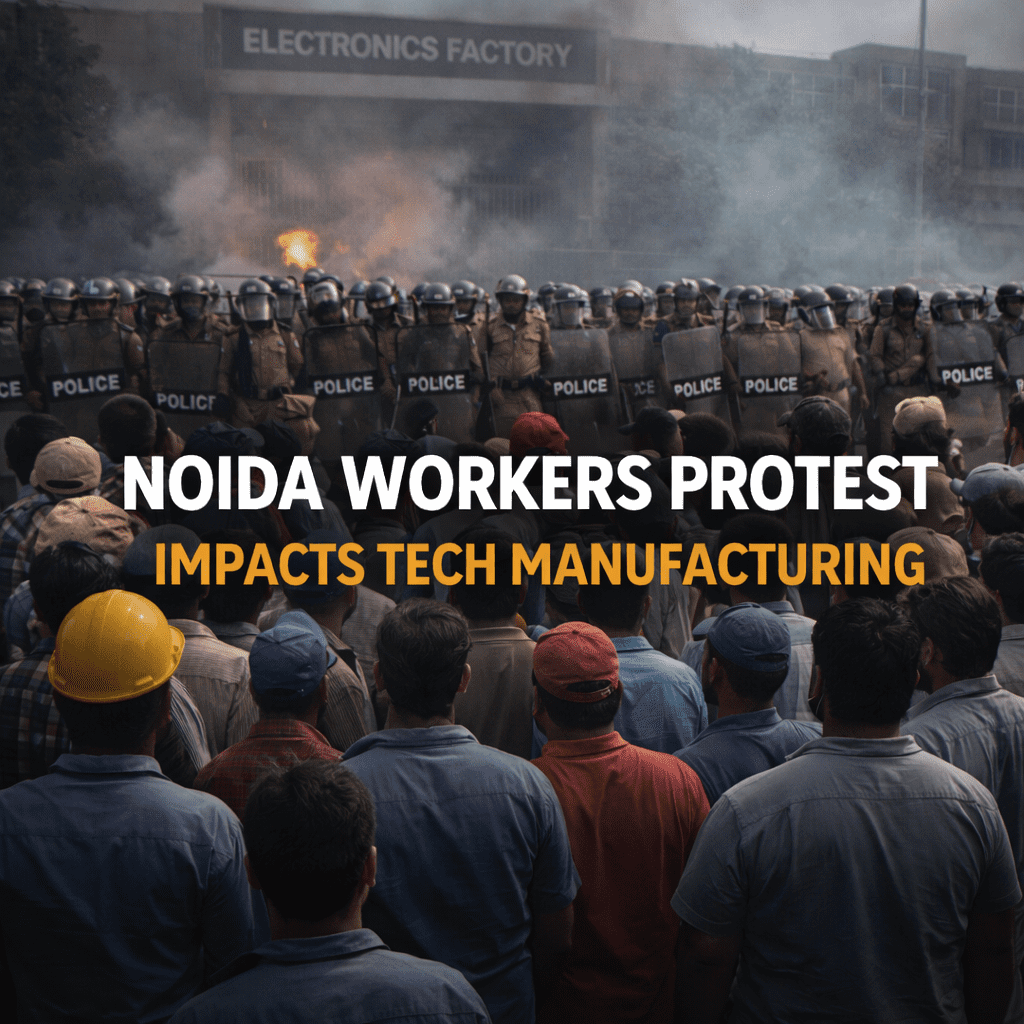
The protest began with workers demanding higher wages and better working conditions. Over time, the situation escalated. Reports showed that large groups of workers gathered in industrial areas, blocked roads, and raised concerns about low pay compared to rising living costs.
On April 13, the situation turned tense in some areas. Clashes broke out between protesters and police. There were incidents of stone pelting and damage to vehicles, and security forces had to step in to control the situation. Even after government announcements about wage increases, protests continued in some parts of Noida.
This shows that the issue is not just about one policy change. It reflects deeper dissatisfaction among workers.
Why This Is a Tech News Story
Noida is not just any industrial city. It is one of India’s key centers for electronics and tech manufacturing. Many factories in this region are part of supply chains that support global brands. This includes smartphone assembly, electronic components, and other tech-related production.
When protests happen in such a location, the impact goes beyond workers and factories. It can affect production timelines, supply chains, and even the confidence of companies that invest in India. That is why this protest is important for the tech industry.
Wage Issues at the Core
The main reason behind the protest is wages. Workers have been demanding better pay that matches their living expenses. Many believe that current wages are not enough, especially when compared to nearby regions.
One key point raised during the protests was the wage gap between Noida and nearby industrial areas like Gurgaon. Workers felt that they were being paid less for similar work. This comparison increased frustration and helped fuel the protest.
The government responded by announcing a hike in minimum wages. However, many workers felt that the increase was not enough. This is why protests did not stop immediately.
Impact on India’s Manufacturing Image
India has been trying to position itself as a strong alternative for global manufacturing. The country has attracted investments in electronics and smartphone production. But stability is a key factor for long-term growth.
Events like the Noida workers protest can raise concerns for companies looking to invest. If labor unrest becomes frequent, it can affect confidence. Companies prefer locations where production is smooth and predictable.
This does not mean India is losing its position. But it highlights the need to balance growth with worker satisfaction.
The Role of Rising Costs
Another factor behind the protest is the rising cost of living. Expenses related to housing, food, and daily needs have increased. When wages do not keep up with these changes, dissatisfaction grows.
Workers are not only asking for higher pay. They are also asking for fairness. They want wages that reflect their effort and allow them to maintain a stable lifestyle. This is a common challenge in fast-growing industrial regions.
A Bigger Trend Beyond Noida
The protest in Noida is not an isolated case. Similar issues have been seen in other industrial areas in India. Wage demands, working conditions, and comparisons between regions are becoming more common.
This suggests that India’s manufacturing sector is entering a new phase. Earlier, low costs were a major advantage. Now, expectations are rising. Workers are more aware and willing to raise their voices.
For companies and policymakers, this means that managing labor relations will become more important in the coming years.
What This Means for Tech Companies
For tech companies, stability in manufacturing is critical. Delays in production can affect product launches, supply availability, and overall business performance.
If protests disrupt factory operations, it can lead to delays in delivering devices to the market. This is especially important in a competitive industry like smartphones, where timing matters.
Companies may also need to rethink their strategies. This could include improving working conditions, ensuring fair wages, and building better communication with workers.
Possible Solutions
To avoid similar situations in the future, a balanced approach is needed.
First, regular wage reviews can help ensure that salaries match living costs. Second, better communication between workers, companies, and authorities can reduce misunderstandings. Third, improving working conditions can increase satisfaction and reduce the chances of unrest.
The goal should be to create an environment where both businesses and workers benefit.
Conclusion
The Noida workers protest is more than a labor issue. It is a reminder that rapid industrial growth must be supported by fair wages and stable working conditions.
For India’s tech manufacturing sector, this is an important moment. The Noida Workers Protest Tech situation highlights the country’s potential to become a global leader in electronics production. But long-term success will depend on how well it manages challenges like worker satisfaction and industrial stability.
If handled properly, this situation can lead to improvements that strengthen the entire ecosystem. If ignored, it could create risks for future growth. That is why the Noida Workers Protest Tech issue is not just a headline. It is a signal of where India’s manufacturing journey is heading next.
According to reports from reuters.com, the protest involved thousands of workers and raised concerns about wage gaps.
You can also read our analysis on Xiaomi Premium India Strategy: Big Shift or Risky Move? to understand how manufacturing changes affect smartphone brands.