
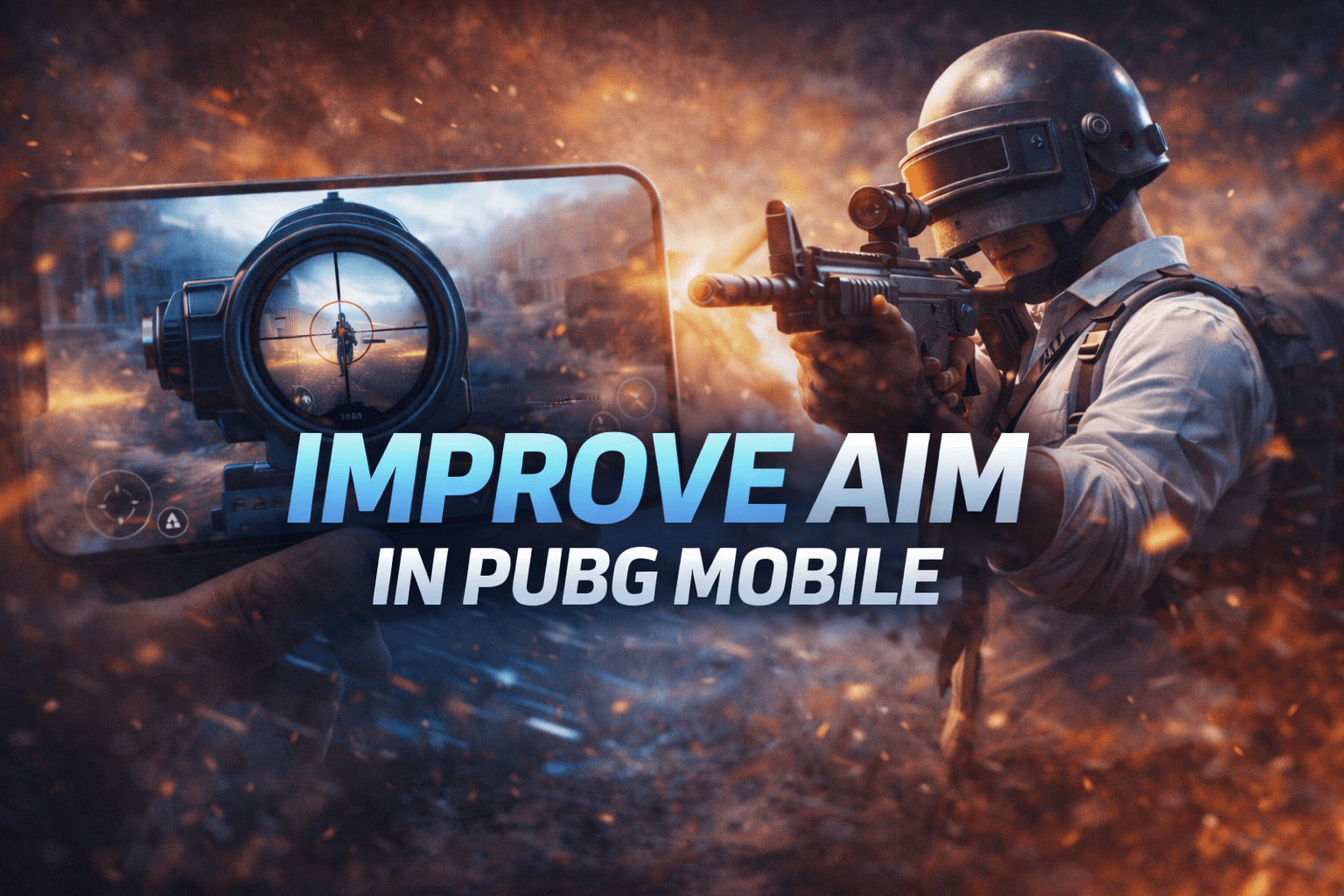
If you want to improve aim in PUBG, you need more than fast reactions. Good aim comes from better crosshair placement, recoil control, tracking, and regular practice. This guide explains how to improve aim in PUBG with simple methods that help you become more accurate, more confident, and more consistent in real matches.
A lot of PUBG players make the mistake of focusing only on sensitivity settings or copying a professional player’s setup. Those things can help, but they are not the full answer. Better aim comes from a mix of mechanics, control, crosshair placement, recoil management, confidence, and repetition. You do not need magical settings to improve. You need a system that makes your shots more consistent over time.
This guide explains how to improve aim in PUBG in a practical way. It is written for real players who want to become more accurate in actual matches, not just in training mode.
Why Aim Matters So Much in PUBG
PUBG is not a fast arcade shooter where you can spray endlessly and hope for the best. It is more punishing. Weapons have recoil, fights can end quickly, and one missed burst can completely change the outcome of a gunfight. Since healing, positioning, and peeking all take time, the player who lands cleaner shots often has the advantage.
Aim in PUBG matters because it affects every type of engagement:
- Close-range spray fights
- Mid-range tracking
- Long-range tapping
- Sniper shots
- Vehicle shots
- Finishing downed enemies quickly
- Clutching under pressure
When your aim improves, the whole game feels easier. You stop panicking as much because you trust your mechanics. You take smarter fights because you know you can win them. That confidence alone can change your performance.
Understand What Good Aim Actually Means
Many players say they want “better aim,” but that phrase is broad. In PUBG, good aim is really a combination of smaller skills working together.
1. Crosshair placement
This means keeping your aim at the height where enemies are likely to appear. If your crosshair is already near the enemy’s chest or head, you need less adjustment before shooting.
2. Recoil control
PUBG weapons kick hard, especially during full-auto spraying. Good recoil control lets you keep bullets on target instead of letting the spray climb over the enemy.
3. Tracking
Tracking is your ability to keep your crosshair on a moving target. This matters a lot in close and medium-range fights.
4. Flick adjustment
Sometimes your crosshair is not perfectly placed and you need a quick snap onto the target. Good flicks help in surprise encounters.
5. First-shot accuracy
Landing the first few bullets quickly is often more important than spraying for too long. The player who starts clean usually wins.
6. Calmness under pressure
Aiming well in training is easy. Aiming well when your heart is racing and footsteps are close is harder. Mental control is part of aim too.
Start With the Right Sensitivity
Sensitivity does matter, but it should support your aim, not confuse it. One of the biggest mistakes players make is changing settings too often. Every time you copy a new sensitivity, you reset your muscle memory and make consistent practice harder.
Your sensitivity should let you do three things comfortably:
- Turn fast enough to react to enemies
- Track targets smoothly
- Control recoil without fighting your mouse or finger movement
If your sensitivity is too high, your aim will feel shaky and inconsistent. Small hand movements will make the crosshair jump too much. If it is too low, turning and reacting may feel slow.
The best approach is to choose a sensitivity that feels controllable and then stick with it long enough to adapt. Do not chase perfection every day. Slight adjustments are fine, but constant changes slow improvement.
For mobile players, the same rule applies. Find a camera and ADS sensitivity that feels stable, especially for recoil-heavy weapons, and practice with it consistently.
Improve Your Crosshair Placement
This is one of the fastest ways to improve aim in PUBG because it reduces the amount of correction you need in fights.
A lot of players run around aiming at the ground, walls, or random space. Then when an enemy appears, they must drag their crosshair upward and sideways before they can shoot. That wastes time.
Instead, try to keep your crosshair where an enemy is most likely to be:
- At chest or head level
- Near doorways when pushing buildings
- Near windows when expecting peeks
- Along ridgelines when scanning open terrain
- At likely cover positions like rocks, trees, and vehicles
Better crosshair placement makes you feel faster without actually increasing your reaction speed. You simply need less movement before firing.
Learn Proper Recoil Control
PUBG is famous for weapon recoil, so if you cannot control spray, your aim will always feel unreliable. Recoil control is not just about dragging down randomly. It is about understanding each weapon’s pattern and controlling it smoothly.
Weapons like the M416, Beryl, AKM, and ACE32 all feel different. Some kick harder vertically, some bounce sideways more, and some become harder to manage at range. You should spend time learning how your favorite weapons behave.
To improve recoil control:
- Practice spraying at a wall and watch the pattern
- Pull down smoothly instead of yanking hard
- Use short controlled sprays at longer distances
- Avoid full sprays when the target is too far
- Use attachments that help stability when possible
The goal is not to eliminate recoil completely. The goal is to keep enough bullets on target to win the fight.
Practice in Training Mode With a Purpose
Many players enter training mode, shoot randomly for a few minutes, and leave. That is not enough. Practice becomes effective when it has structure.
A useful training session should include specific tasks such as:
- Ten minutes of recoil control with your main weapons
- Tracking moving targets
- Tapping at mid and long range
- Practicing quick scope-ins
- Switching between targets smoothly
Do not just shoot to feel busy. Focus on accuracy and control. If your Beryl spray is wild, work on that. If your sniper follow-up shots are slow, practice that specifically.
Training mode is valuable because it removes match pressure and lets you isolate mechanics. Even fifteen to twenty focused minutes before playing can make a real difference.
Use the Right Weapons to Build Aim
Some players sabotage their improvement by constantly switching weapons. While versatility is useful, skill grows faster when you become very comfortable with a few reliable guns.
If you are still improving your aim, choose a stable set of weapons and learn them deeply. For example:
- M416 for manageable spray and flexibility
- UMP for easier close-range control
- AKM or Beryl if you want to master harder recoil
- Mini14 or SKS for tapping practice
- Kar98k or M24 for bolt-action precision
You do not have to use the easiest weapon forever, but building confidence with controllable weapons can improve your fundamentals faster.
Stop Over-Spraying
One of the most common aim mistakes in PUBG is spraying for too long. Players start missing, panic, and continue holding the trigger even when recoil has already made the spray inaccurate.
Smart players know when to stop, reset, and shoot again.
At close range, full-auto sprays make sense. At medium range, short sprays are often stronger. At long range, tapping or bursting is usually better than trying to force a full spray.
Better aim is not only about mechanical skill. It is also about choosing the right shooting method for the distance.
Work on Tracking Moving Targets
Enemies in PUBG rarely stand still. They strafe, jump, crouch, run to cover, and peek from odd angles. If your crosshair cannot stay connected to movement, you will lose many winnable fights.
Tracking improves when you stay relaxed. Many players tense up and move too aggressively, which causes overcorrection. Instead of wildly chasing the enemy with your crosshair, try to move smoothly and stay centered on their path.
A few things help here:
- Do not grip your mouse or phone too tightly
- Focus on smooth control rather than sudden jerks
- Predict movement slightly instead of reacting too late
- Practice against moving targets regularly
Tracking is especially important with SMGs and ARs during close and medium-range fights.
Master Peeking and Pre-Aiming
Good aim is not just about the hand. It is also about how you take the fight.
If you swing a corner carelessly, your aim will always feel worse because you are reacting late. But if you pre-aim the likely enemy position before peeking, you enter the fight already prepared.
Try to build the habit of:
- Pre-aiming doors before entering rooms
- Keeping the crosshair ready at head or chest level
- Peeking with intention instead of wide panic swings
- Expecting where enemies are likely positioned
Players with average raw aim often beat mechanically stronger players simply because they pre-aim better and make the fight easier for themselves.
Improve Your Movement Without Hurting Accuracy
Movement and aim need balance. Some players stand still too much and become easy targets. Others move so wildly that their own shots become inconsistent.
In PUBG, strong movement supports aim rather than replacing it. You want movement that keeps you alive while still letting you land shots.
This means:
- Strafing carefully in close fights
- Using cover while keeping the crosshair ready
- Avoiding unnecessary jumping during gunfights
- Stopping briefly when accuracy matters for taps or long-range shots
- Repositioning after shooting instead of repeating the same peek
Better movement creates cleaner shooting opportunities, which makes your aim more effective.
Lower Panic in Real Fights
Aiming well in practice is one thing. Aiming well when footsteps are close and the final circle is shrinking is another. Pressure causes rushed sprays, shaky flicks, and poor decision-making.
One of the best ways to improve under pressure is simply to take more fights. Do not spend every match hiding and looting for twenty minutes. If you avoid engagements, you avoid the repetitions that build confidence.
Fight more often, especially in hot drops or active areas, and use each fight as experience. Over time, your brain stops treating every encounter like a crisis. You stay calmer, and your aim becomes more natural.
A player who has seen hundreds of chaotic fights usually aims better under pressure than a player who only practices safely.
Review Your Misses Honestly
If you really want to improve, start noticing why you miss.
Ask yourself after fights:
- Was my crosshair too low?
- Did I over-spray?
- Was my sensitivity too unstable?
- Did I panic and pull too hard?
- Did I peek badly?
- Did I choose the wrong weapon for the range?
Improvement becomes faster when you identify patterns. Maybe your close-range tracking is fine, but your mid-range sprays fall apart. Maybe your recoil is good, but your crosshair placement entering buildings is weak. Once you know the problem, practice becomes more focused.
Build a Simple Daily Aim Routine
You do not need a complex program. You just need consistency. A simple routine can improve your aim a lot over time.
A strong pre-match routine could look like this:
- 5 minutes of crosshair and target switching
- 5 minutes of recoil practice with your main AR
- 5 minutes of close-range tracking
- 5 minutes of tapping with DMR or sniper
- Then start real matches and actively take fights
That kind of routine is short enough to maintain and long enough to sharpen your mechanics before games.
Do Not Compare Yourself Too Much to Pros
Watching professional PUBG players is useful, but copying everything instantly is not. Pros have thousands of hours, strong positioning, and deep game sense in addition to aim. If you only copy their sensitivity or aggressive style without understanding the full picture, you may get frustrated.
Instead, learn from them in smaller ways:
- Watch their crosshair placement
- Notice how they control sprays
- See when they tap versus spray
- Observe how calmly they peek and reposition
Take lessons from strong players, but build your own consistency.
Final Thoughts
If you want to improve aim in PUBG, focus on the basics and repeat them until they become natural. Good sensitivity helps, but consistency matters more. Recoil control matters, but so does crosshair placement. Tracking matters, but so does staying calm enough to use it in real matches.
The biggest mistake players make when they try to improve aim in PUBG is looking for one magic fix. There is no single setting or shortcut that instantly transforms your aim. Real improvement comes from small habits done well over time. To improve aim in PUBG, practice with purpose, take more fights, learn from your mistakes, and stay patient with the process.
As your aim gets better, you will notice more than cleaner shots. You will feel more confident in duels, more comfortable under pressure, and more in control of every engagement. That is when PUBG starts becoming much more rewarding.
For official game updates and PUBG-related information, visit the official PUBG website.
You can also read our guide on How to Reduce Ping in Online Games to improve overall performance and responsiveness during fights.